Chicken and Oat Cat Treats: What to Check Before Baking
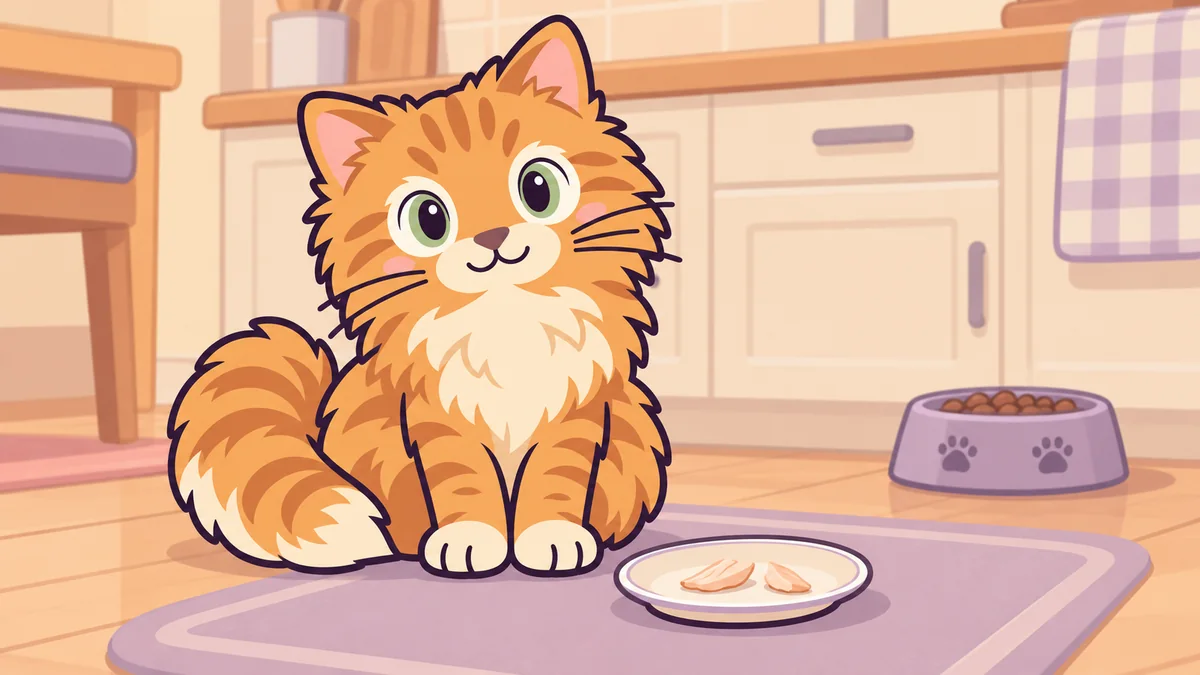
If your cat can have chicken, a small piece of plain, fully cooked, boneless meat is a simpler occasional reward than an improvised chicken-and-oat biscuit. A cat with a prescribed diet may need a different treat agreed with the veterinary team. 1
Recipe update: We have removed the previous “crunchies” formula and its baking and storage instructions because they were not validated. We cannot call the biscuits nutritionally balanced or promise that a stated oven time makes the mixture safe.
Check every added ingredient
Chicken stock and broth may contain onion or garlic. “Low sodium” is not a guarantee that they are appropriate for cats. Gravy, seasoning mixes and leftover sauces need the same careful ingredient check. 2
Adding flour, oil and egg does not automatically make a treat healthier. Flour is a raw ingredient that can carry harmful bacteria, and raw egg also needs proper food handling. Do not offer uncooked dough or assume a quick home heat-treatment makes raw flour safe to eat. 3
Crunch is not a dental-care plan
We do not have evidence that the former recipe cleans teeth, prevents plaque or improves digestion. A pleasing texture is not a tested health benefit. For a dental concern, ask the vet about an appropriate dental-care routine rather than using this recipe as treatment.
Make the reward easy to count
Use a manageable bite, supervise your cat and count it with the day’s other extras. A few pieces from the normal complete food allowance can also work as rewards. Treats need to stay a small part of the diet, and medical feeding plans take priority. 4
You can still enjoy a small snack ritual: set aside the agreed reward, call your cat over, then enjoy a game or a cuddle. No biscuit tin required.
Sources & further reading
These references support this guide. Their publishers have not reviewed or endorsed this website.